Icebreaker games for people who just met
The best icebreakers let people share a little without putting anyone on the spot. The worst ones depend on knowing each other already. Here's how to tell the difference, and what to play.
What makes a good icebreaker
- You don't need to know anyone. The game is about yourself, not guessing about others.
- Everyone talks a little. Nobody gives a speech, nobody sits silent.
- There's an easy way out. You can share something small and still play well.
- It creates things to talk about later. "Wait, you've been to Japan?"
Start with these
Two Truths and a Lie
The perfect first game. You learn two real things about everyone, and the lie usually turns into a story. Everyone chooses what to share, so nobody feels exposed.
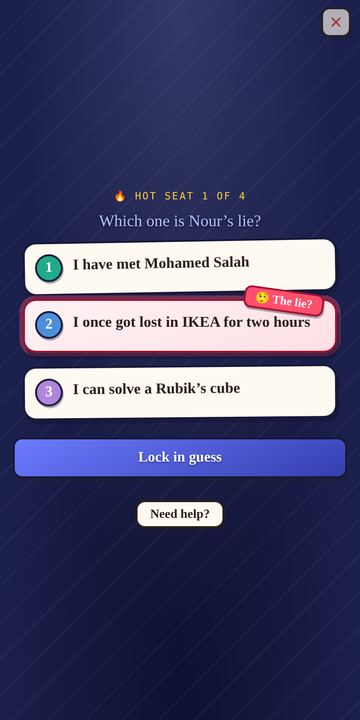
On phones, Who Said It's version shows each person's three statements in a random order and scores it for you.
Hot Takes
Everyone writes an opinion like "breakfast is overrated", and the group rates how much they agree. You find out fast who shares your taste, and it starts real conversations. Opinions are anonymous until someone guesses, so shy people can be bold. How to play.
Would You Rather
Low pressure and always funny. Ask people to explain their choice; the reasons are where you learn about them.
Once people are warmed up
Chain Story
Writing a ridiculous story together is a fast way to find who has the same sense of humour. Nobody needs to know anyone. How to play.
Partners in Crime
Two people try to get a word across using things only they'd both know. With new people, it turns into "what do we have in common?", which is exactly the point. How to play.
Save these for later
Some games are great, just not on day one:
- Who Is It and You Drew That?: both are about describing or drawing people at the table. Hard and a bit awkward when you've known them for an hour.
- Classic Who Said It: guessing who wrote an answer works best when you know each other's humour.
- I Have a Confession: brilliant with close friends, too much with strangers.
Tips for a quiet group
- Go first. Share something slightly embarrassing. It sets the tone that it's fine.
- Keep rounds short. Quick wins build energy; long silences kill it.
- Let phones help. Typing an answer is easier than saying it out loud for shy people, and anonymous answers take the pressure off.
- Don't force anyone. A pass is always allowed.
More ideas: party games for 3 people · all game modes · play now →